JEE Main Cutoff 2026 : Category-wise Qualifying Percentile, Expected Marks & Previous Year Trends
For those looking to become engineers, the JEE Main cutoff is one of the top 2026 updates that they’ll want to read about because it will help to determine whether or not they’re able to get into one of the top NITs, IIITs or become eligible to write their JEE advanced 2026. The National Testing Agency (NTA) will announce what their qualifying cutoff will be with their JEE Exam result. That qualifying cutoff will determine who is eligible to write the JEE Advanced as well as which candidates will be able to participate in the counseling process at the very best engineering institutes throughout India.
There are several different factors that could affect the 2026 JEE Main cutoff. These include, but are not limited to: total number of candidates; difficulty of exam, availability of seats and overall performance of students. The qualifying cutoff that is set by the NTA based on the performance of the students, does not necessarily correlate with the admission cutoffs for the institutes which are based on the total number of applicants applying to each specific engineering branch/class/specialisation.
In this blog, we will look to provide our students with an estimate of their chances for being able to qualify for the JEE Advanced; we will provide analysis on how expected JEE Main 2026 Cutoff could change based on a number of different variables; expected cutoff qualifying marks/category-wise and a look at past years’ percentage points.
Expected JEE Main Cutoff 2026
Based on previous years’ trends and exam competition, the expected JEE Main 2026 qualifying percentile may remain competitive for General category candidates. Reserved category candidates are likely to receive some relaxation as per government norms.
Expected Category-wise JEE Main Cutoff 2026
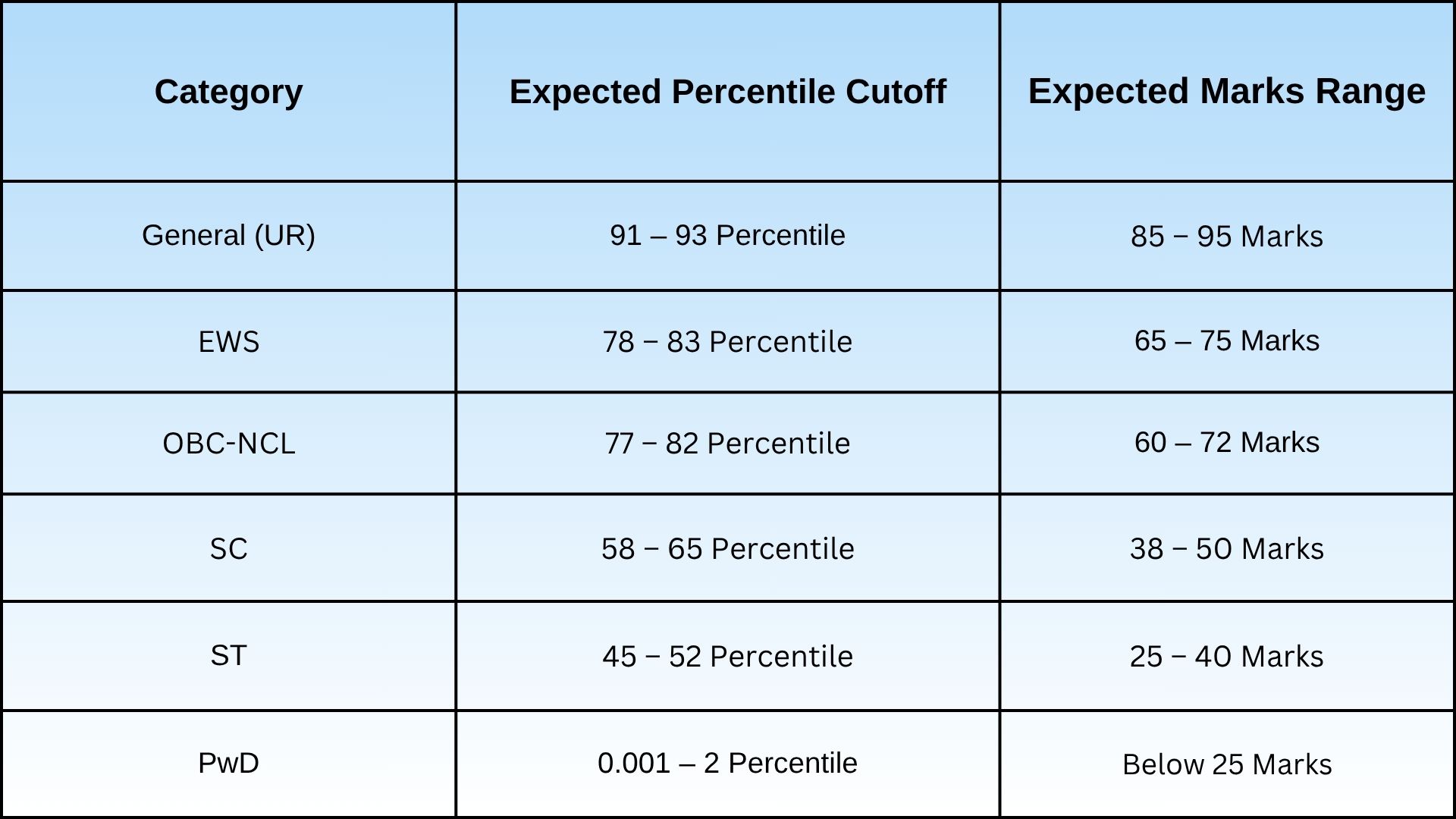
The official cutoff may change depending on the final normalization process conducted by NTA.
What is JEE Main Qualifying Cutoff?
The minimum percentile required for the candidate to qualify for JEE Advanced is known as the cutoff for JEE Main. A candidate scoring above the JEE Main cutoff will be eligible to appear for the next stage of the IIT admission process.
Therefore, qualifying JEE Main does not guarantee a place at NITs, IIITs, or IITs; the admission cutoff at those schools is normally much higher than the JEE Main cutoff especially for highly sought after majors like Computer Science Engineering and Artificial Intelligence.
Factors Affecting JEE Main 2026 Cutoff
Many factors contribute to a cutoff each year. An increase in competitiveness, even a slight one, can cause large changes in percentile trends.
Major Factors Affecting JEE Main Cutoff
Total number of candidates appearing
Difficulty level of the examination
Number of seats available
Student performance across shifts
Reservation policies
Normalization process by NTA
If the amount of papers is more difficult, then the cut-off can decrease slightly. Conversely, if there are easier papers, many more comparisons will be made than there will be at an average level.
Previous Year JEE Main Cutoff Trends
If you examine trend data for the previous years for this examination series, you will be able to see a clear picture of how the cut-off has changed over time, allowing you to make a fair estimation of your potential to qualify for the examination.
JEE Main Previous Year Cutoff Percentile
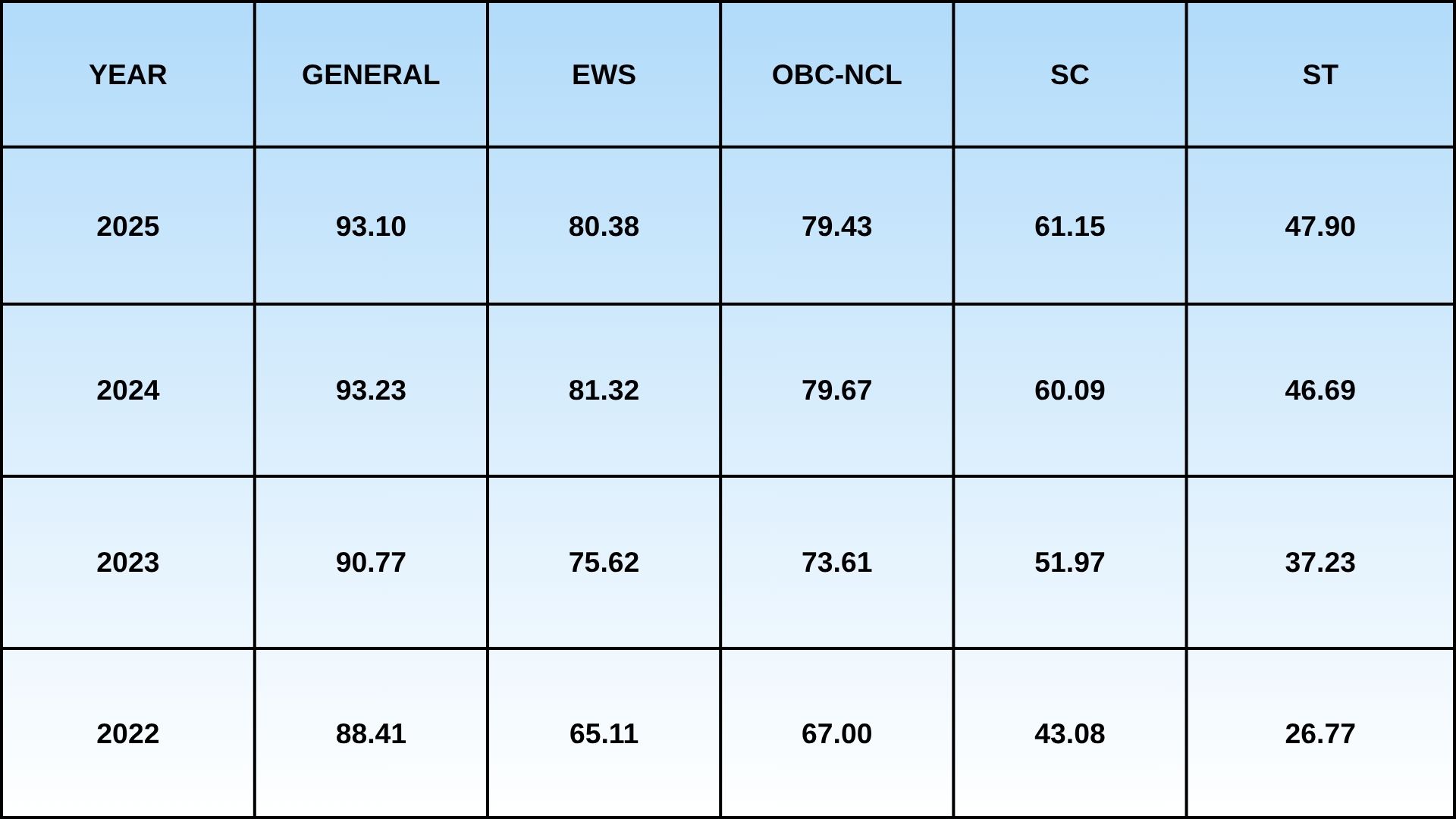
The trend shows that competition has increased consistently over the years, especially for the General category.
Expected Marks vs Percentile in JEE Main 2026
Many students look for a score needed to achieve a desired percentile. While these scores will be calculated based on two things: the difficulty of the shifts you have taken and the normalization of the scores from all shifts, approximate trends can give students an idea about how they performed based off of their percentile relative to other students who took their same tests as well.
Expected Marks vs Percentile
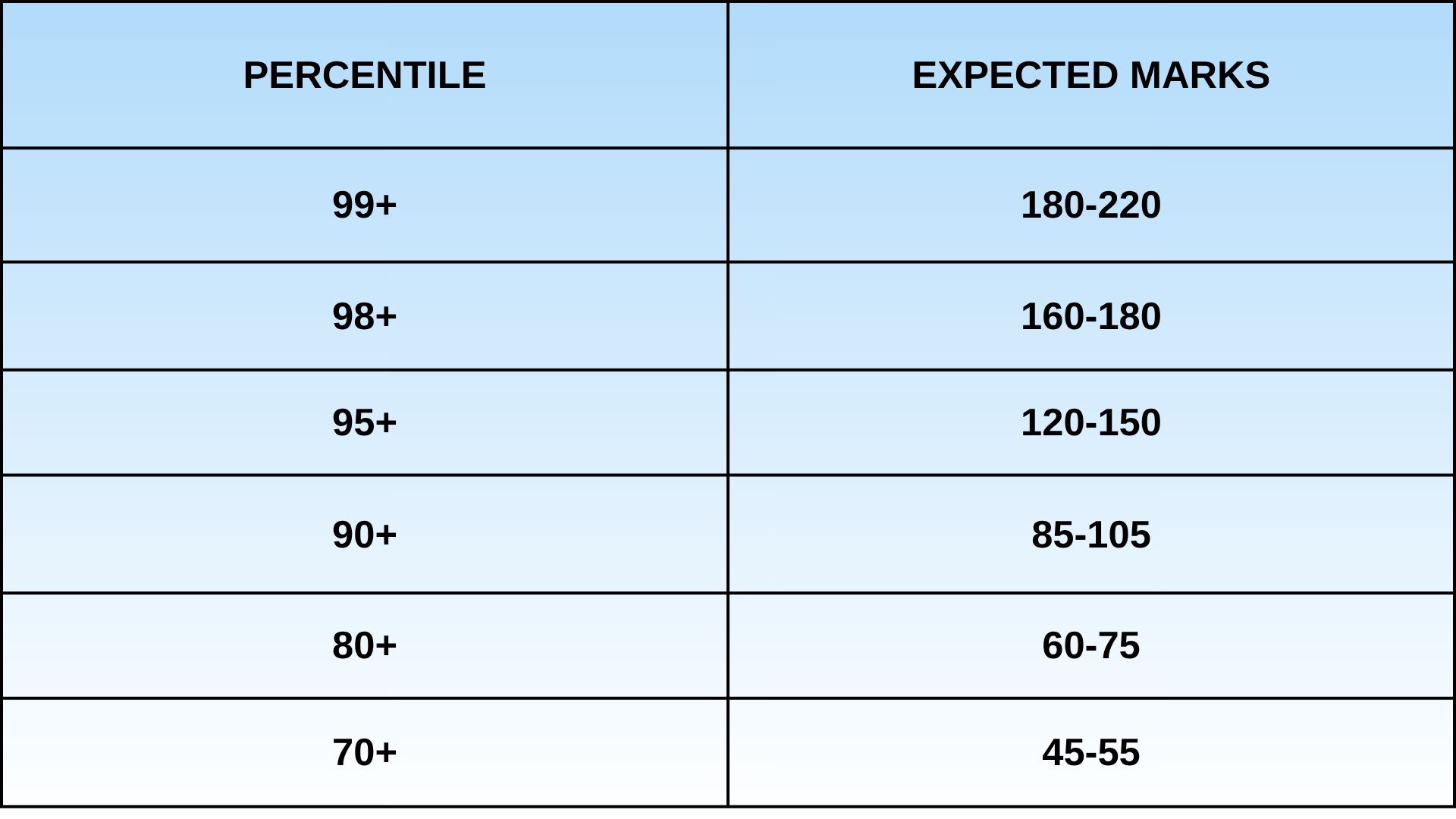
Students should note that tougher shifts may require lower marks for the same percentile.
Difference Between Qualifying Cutoff and Admission Cutoff
The qualifying cutoff is used to show someone who has passed the qualifying test based on their scores and ranking, in order to be allowed; eligibility to apply at JEE advanced.
College admission cutoffs are released separately from JoSAA and schools at the time of counselling for students, meaning there is a possibility to qualify for JEE Advanced, yet not be offered admission into one of the top NIT's if your rank is below what is deemed competitive.
Top Branches with High Admission Cutoffs
Many engineering branches consistently have a high closing rank because of excellent placement options and industry demand.
Branches with Highest Competition
Computer Science Engineering (CSE)
Artificial Intelligence (AI)
Data Science
Information Technology (IT)
Electronics and Communication Engineering (ECE)
Students who are trying for these branches should be trying to achieve higher than the minimum qualifying percentile.
Tips to Score Above JEE Main 2026 Cutoff
To crack JEE Main, you should have consistency, smart preparation, and effective revision. Students trying for the top percentiles will want to focus on conceptual clarity and practice with mock tests.
Preparation Tips for Better Percentile
Revise NCERT thoroughly
Practice previous year papers
Attempt regular mock tests
Focus on time management
Strengthen weak subjects
Analyze mistakes after every test
Consistent preparation often matters more than studying for long hours without strategy.
Expected Safe Score for Top NITs in 2026
Students aiming for admission into top NITs should target higher scores than the qualifying cutoff.
Safe Score Targets
Top NIT CSE: 99+ Percentile
Mid-tier NITs: 95–98 Percentile
Good IIITs: 94–97 Percentile
Core branches in NITs: 90+ Percentile
The required percentile may vary depending on category, home state quota, and branch preference.
Final Thoughts
The JEE Main Cutoff 2026 is an important piece of information for students because it helps to determine their eligibility for JEE Advanced and admission into the best engineering schools. The expected cutoff provides students with some guidance; however, the ultimate cutoff will be based on the normalization of scores, the amount of competition in general, and how difficult the exam was as a whole.
The key for students will be to maximize their score rather than try to reach a specific cutoff percentile since a higher percentile means it will be more likely that they will gain admission to a high-quality engineering school, as well as have the opportunity to study in premium engineering branches like computer science, artificial intelligence, and data science.
To help plan your JEE Main 2026 preparation strategy/counseling strategy, it is advisable to look at previous years' trends through looking at qualifying marks for previous years as well as category-wise cutoff analysis.
Frequently Asked Questions
What is the expected JEE Main Cutoff 2026 for General category?
The expected JEE Main 2026 cutoff for the General category is likely to be between 91 to 93 percentile, depending on exam difficulty and competition.
Is JEE Main cutoff the same for all categories?
No, JEE Main cutoff varies category-wise for General, OBC-NCL, EWS, SC, ST, and PwD candidates according to reservation rules.
What is the minimum percentile required for JEE Advanced 2026?
Candidates must score above the official qualifying cutoff percentile released by NTA to become eligible for JEE Advanced 2026.
Can I get NIT admission with 90 percentile in JEE Main?
Yes, students with 90 percentile may get admission to some NITs and branches depending on category, home state quota, and counselling rounds.